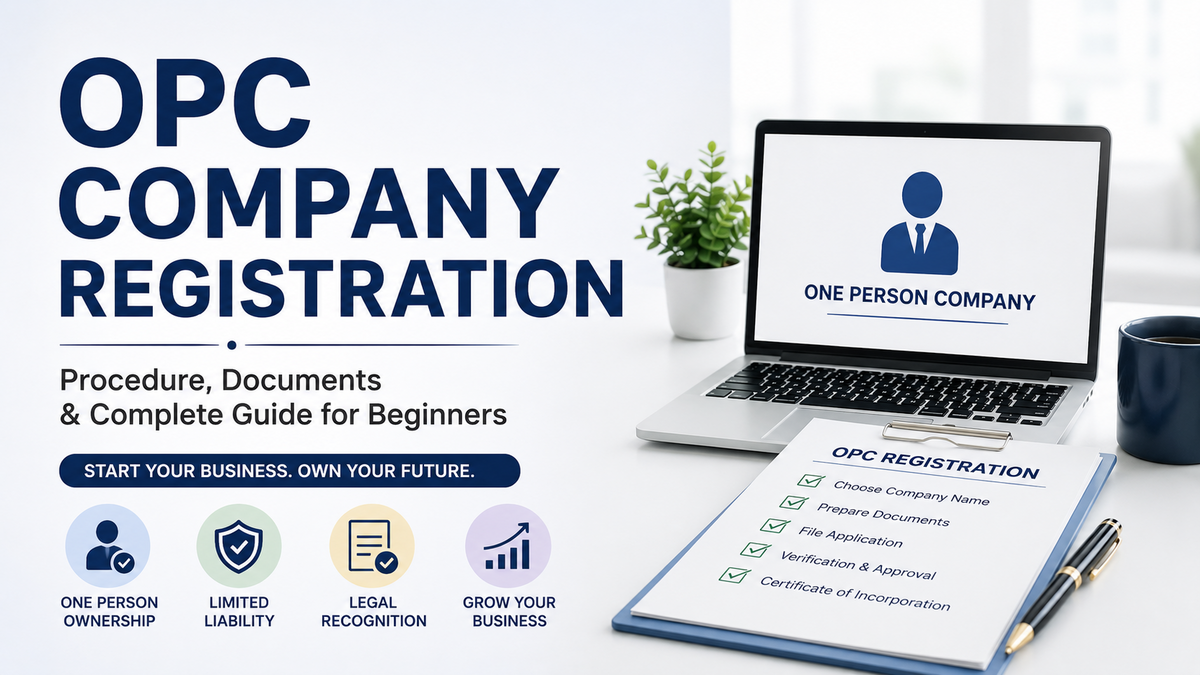
Starting a business on your own is an exciting achievement. Many entrepreneurs begin with a single idea, a laptop, and the determination to build something meaningful. While starting as an individual is easy, registering your business under the right legal structure can help you grow with confidence. One of the most popular options for solo entrepreneurs is a One Person Company, commonly known as an OPC.
If you are registering a business for the first time, legal procedures may seem complicated. There are forms to complete, documents to prepare, and rules to understand. The good news is that the process becomes much simpler when you know each step.
This beginner friendly guide explains everything you need to know about One Person Company registration in India in 2026. You will learn what an OPC is, why it is beneficial, the documents required, the registration process, common mistakes to avoid, and the responsibilities after incorporation.
What Is a One Person Company?
A One Person Company is a type of business structure that allows a single entrepreneur to own and manage a company while enjoying many of the benefits of a private limited company.
Unlike a sole proprietorship, an OPC has its own legal identity. This means the company is treated separately from its owner. It can own assets, sign contracts, open bank accounts, and continue operating according to legal provisions.
For individuals who want complete control over their business while maintaining a professional identity, an OPC is an attractive option.
Why Choose an OPC?
An OPC offers several advantages that make it suitable for first time business owners.
The owner enjoys limited liability, which helps protect personal assets in many situations.
The company has a separate legal identity.
It creates greater trust among customers, suppliers, and financial institutions.
The business can continue operating as a registered entity.
The structure provides a professional image that supports long term business growth.
For many solo entrepreneurs, these benefits make an OPC a better choice than operating without formal registration.
Who Should Register an OPC?
An OPC is ideal for entrepreneurs who want to start and manage a business on their own.
It is commonly chosen by consultants, freelancers, digital marketers, software developers, designers, online business owners, content creators, trainers, and professionals offering specialised services.
If you are planning to build a business independently while maintaining legal recognition, an OPC may be the right structure for you.
Eligibility for One Person Company Registration
Before beginning the registration process, it is helpful to understand the basic requirements.
The company should have only one member.
A nominee should be appointed according to applicable legal requirements.
The company must have a registered office address in India.
The proposed company name should be unique and should not conflict with existing registered companies or trademarks.
Meeting these requirements before applying helps avoid unnecessary delays.
Documents Required for OPC Registration in 2026
Preparing all documents before starting the application makes the registration process faster and smoother.
Documents for the Director and Member
PAN Card
Aadhaar Card
Passport if applicable
Passport size photograph
Email address
Mobile number
Identity proof
Address proof such as a bank statement, electricity bill, passport, voter ID, or driving licence
Documents for the Registered Office
Latest electricity bill or utility bill
Rent agreement if the office is rented
No Objection Certificate from the property owner whenever applicable
Ownership proof if the property belongs to the owner
Ensure that all documents are clear, valid, and contain matching information.
Step by Step OPC Registration Procedure
Understanding each stage of the registration process makes it easier for beginners to complete the formalities confidently.
Step 1: Select a Unique Company Name
Choose a business name that represents your brand and is different from existing registered companies and trademarks.
A unique name also helps create a stronger business identity.
Step 2: Prepare All Required Documents
Collect identity proofs, address proofs, office documents, photographs, and other supporting information before starting the application.
Proper preparation helps reduce delays.
Step 3: Complete the Registration Application
Fill in the incorporation application carefully with accurate information about the member, nominee, registered office, and company details.
Always review every detail before submitting the application.
Step 4: Verification by the Authorities
The submitted application is reviewed by the concerned authorities.
If additional information or supporting documents are required, you may be asked to provide them before approval.
Step 5: Receive the Certificate of Incorporation
Once the application is approved, the company receives its Certificate of Incorporation.
This certificate confirms that your One Person Company has been legally registered and is ready to begin business operations after completing any additional registrations required for your activities.
What Should You Do After Registration?
Many new entrepreneurs believe registration is the final step. In reality, it is only the beginning.
After incorporation, you should open a business bank account, maintain proper accounting records, preserve important company documents, comply with tax requirements wherever applicable, and complete annual legal filings on time.
Building good compliance habits from the beginning helps your business operate smoothly.
Common Mistakes Beginners Should Avoid
Many registration problems happen because of simple mistakes.
Choosing a company name without checking its availability.
Submitting incomplete or outdated documents.
Providing incorrect information in the application.
Ignoring legal responsibilities after incorporation.
Not understanding the role of the nominee.
Waiting until deadlines before completing compliance requirements.
Avoiding these mistakes can save valuable time and prevent unnecessary complications.
Helpful Tips for First Time Entrepreneurs
Take time to understand whether an OPC suits your long term business goals.
Keep digital copies of every important document.
Use an active email address and mobile number for official communication.
Review every application carefully before submission.
Maintain proper financial records from the first day of business.
Learn about your compliance responsibilities instead of focusing only on registration.
A strong business begins with organised documentation and responsible management.
Frequently Asked Questions
Can one person own an OPC?
Yes. An OPC is specifically designed for a single entrepreneur who wants to own and manage a registered company.
Is a registered office mandatory?
Yes. Every One Person Company must have an official registered office address for legal communication and government records.
Can an OPC be converted into another company structure later?
Yes. Subject to applicable legal provisions, an OPC may be converted into another business structure when required.
How long does OPC registration usually take?
The registration timeline depends on document accuracy, application completeness, and the verification process. Correctly prepared applications are generally processed more efficiently.
Is an OPC suitable for freelancers?
Yes. Many freelancers and independent professionals choose an OPC because it offers legal recognition, limited liability, and a professional business identity.
Final Thoughts
A One Person Company is an excellent option for individuals who want to build a business independently while enjoying the advantages of a registered company. It combines simplicity with legal recognition and provides a strong foundation for long term growth.
The registration process may seem technical in the beginning, but understanding each step makes it much easier. Preparing accurate documents, choosing the right company name, and staying compliant after incorporation are just as important as receiving the registration certificate.
Every successful business starts with the right foundation. By understanding the OPC registration process and following good business practices from the beginning, you can focus more on growing your business and less on avoidable legal challenges. If you are planning to begin your entrepreneurial journey in 2026, an OPC can be a practical and reliable way to start.